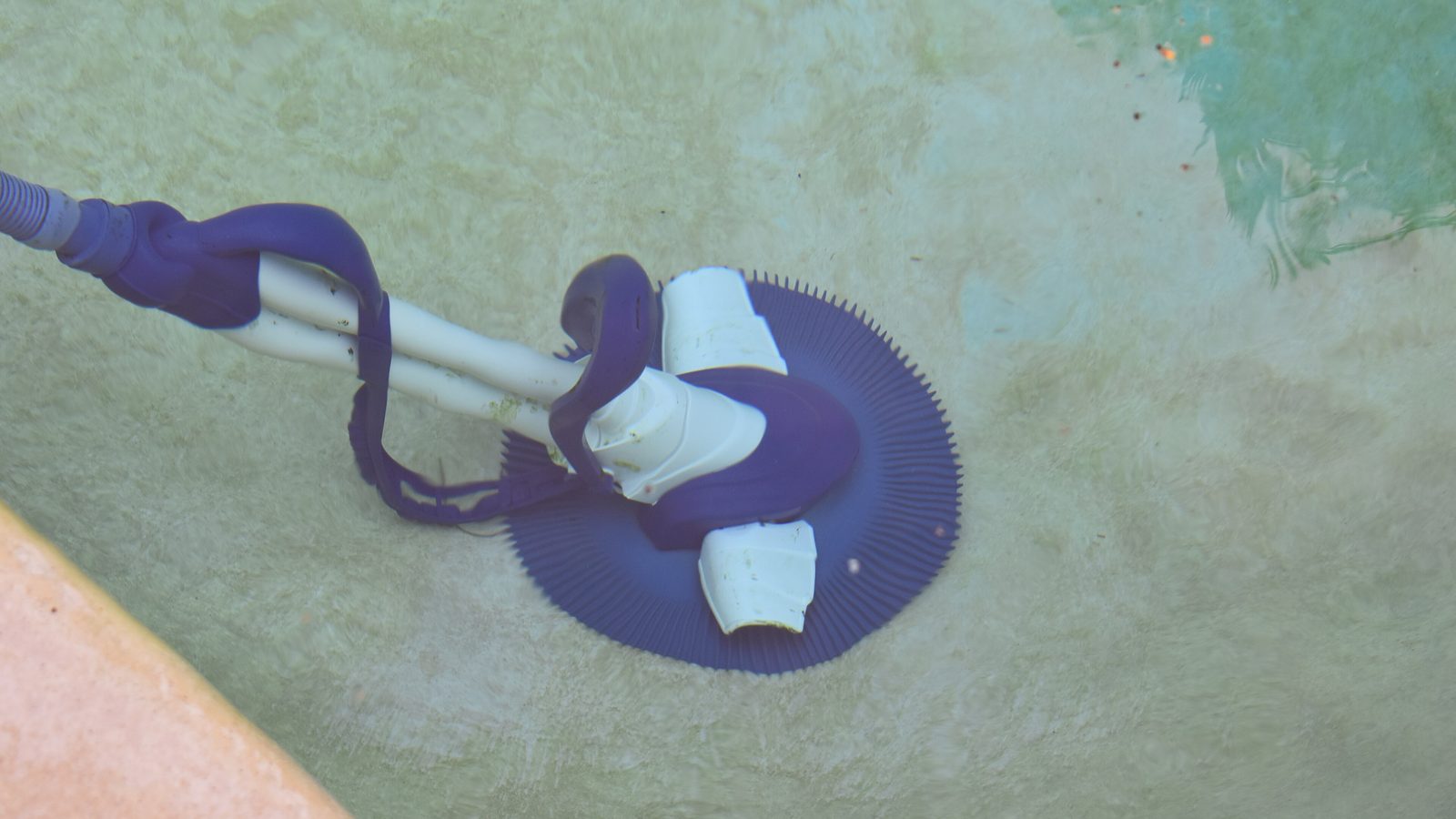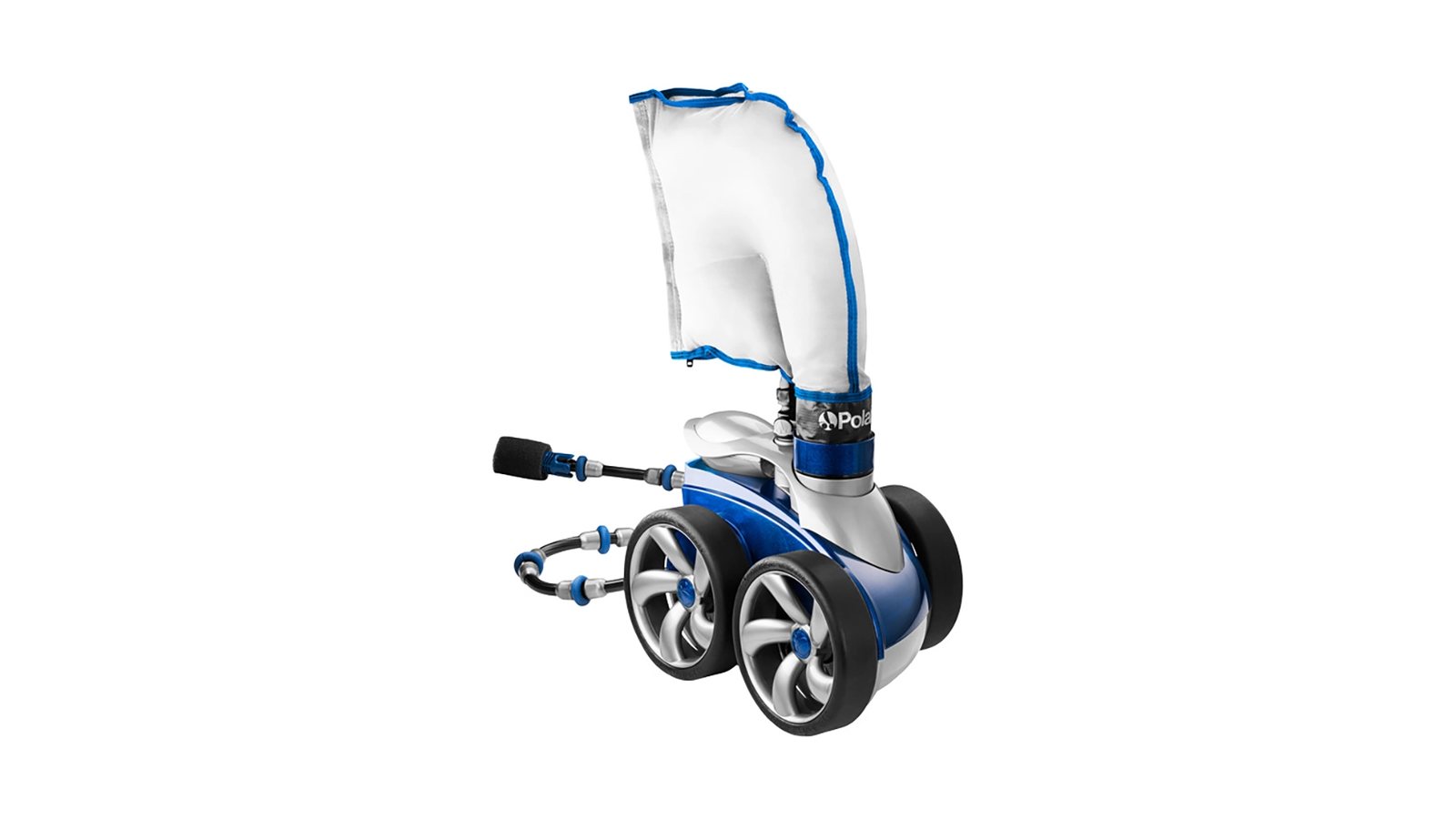
A Polaris pressure cleaner moves on water pushed through a dedicated return line. Most of them need more pressure than the filter pump gives, and a second pump, the booster, supplies it. The booster takes water after the filter and feeds the cleaner’s line.
Which cleaners need one
From Zodiac’s catalogs and the owner’s manuals:
- Polaris 280: booster pump required.
- Polaris 380: booster pump required.
- Polaris 3900 Sport: runs from a dedicated booster pump.
- Polaris 360: no booster. It runs off the filter pump’s return through a dedicated pressure line. Zodiac Australia gives a minimum flow of 150 L/min, about 40 gpm.
The booster Polaris recommends for the 280, 380 and 3900 is the PB4-60.
What the PB4-60 manual says
The manual gives a 3/4 hp motor at 3,450 RPM, wired for 230 V or 115 V, with service-factor amps of 6.4 and 12.8. It sets a minimum outlet pressure of 45 psi, because lower pressure can overload the motor. That figure protects the pump. It is not a setting for the cleaner.
The manual also says system pressure tests must not exceed 35 psi.
Booster parts by maker number: P61 motor, R0445500 seal, R0536400 impeller, R0536300 volute, R0536600 backplate O-ring, P19 6 ft pump hose and R0617100 quick-connect install kit.
How the cleaner is set
Polaris sets its pressure cleaners by wheel speed rather than a pressure reading. The 280, 360 and 380 should turn 28 to 32 RPM; the 3900 Sport 30 to 36 RPM in the US manual. On the 280 and 380, restrictor disks and the pressure relief valve bring the speed into range. On the 360, the supplied pressure tester, a diverter valve and eyeball fittings on any extra returns do the job.
The booster and a robot
The booster runs whenever the cleaner runs, on top of the filter pump. A robot needs neither: it has its own motor and filter and plugs into an outlet or a charger. The running cost calculator puts the two side by side with your own figures. Parts for the booster cleaners are on the Polaris 280, 360 and 380 and 3900 Sport pages.